
Lately, I’ve been thinking about our capacity as parents.
We make assumptions constantly about what kind of parents we are, based on our perceptions of what we are and aren’t capable of. But much of what we believe is a limit of our capacity is really just a prediction. Our nervous system guesses how a moment is going to go, and we feel, behave, and respond according to that guess, often before we've even found out the truth.
By capacity, I mean our ability to face stressful moments while staying connected to ourselves and the people around us. By limits, I want to delineate between two different things. Real limits are the genuine boundaries of our bodies, minds, and circumstances, from exhaustion and illness to disability and a lack of support. These must be respected and cannot be overridden. This post is about the other kind: the limits that keep us stuck in self-judgement, narrow our view of ourselves, and convince us we're less than we are.
I’ve often noticed this kind of perceived limit in the gap between what other people say they could never do, and what I tell myself I could never do.
As a home-educating parent, people constantly say, "I could never do that! I don't have the patience." The truth is, I'm not an especially patient person, and I definitely wouldn’t list it as one of my stronger capacities. Yet, for whatever reason, home education feels within my capacity. On the other hand, when I watch friends fly internationally with several small children without another supporting adult, I'm stressed just watching. And all I can think is, "I could never do that".
But neither of these assessments is actually measuring our ability. It’s simply a prediction, and these predictions so often crystallise into beliefs.
How beliefs become a state
The body doesn't react to what's happening so much as to what it expects to happen. In a challenging moment, whether it's a meltdown in the store or a traffic jam with a car full of kids, your nervous system quickly checks it against everything you've been through and decides whether you'll cope. If it decides you will, you stay in the calm, connected place where you can think clearly. If it decides you won't, you're pushed up into the zone of fight or flight (snapping, rushing, needing to control) or down into the zone of shutdown (going numb, withdrawing, thinking "I can't").
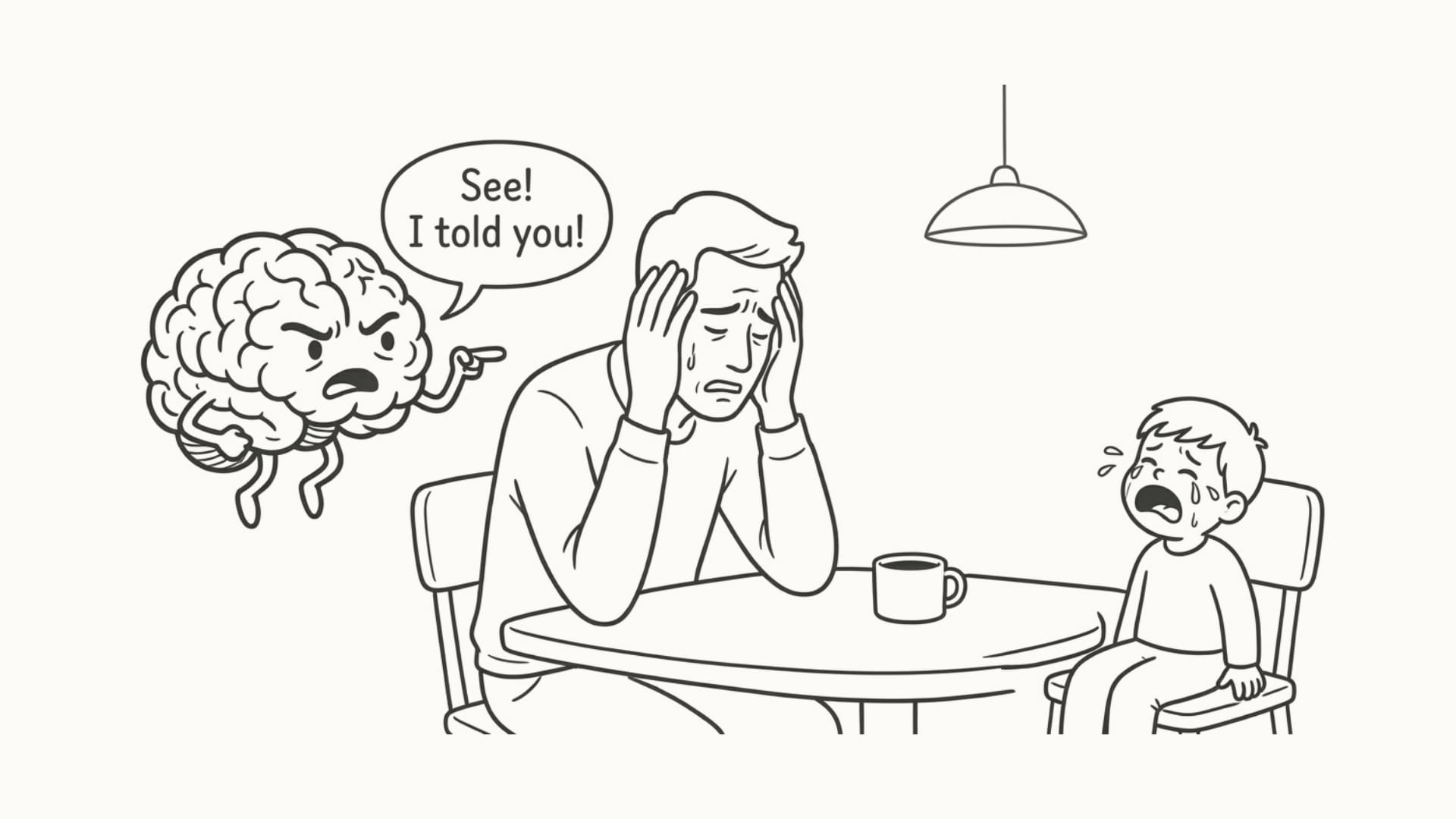
The trouble is that in either zone, the part of your brain that stays patient, thinks logically, and solves problems takes a backseat. So, inevitably, you don’t handle the moment as well, and your brain files that away as proof that you couldn't cope. This is how predictions begin to look more like assumptions and foregone conclusions about who we are and what we’re capable of.
When we see capacity as a track record rather than a fixed trait, a growing file of every time we've felt discomfort and come through it, we start to realise how dynamic these assumptions can be. Home education works for me because I have years of evidence that I can get through the hard moments. But, a long flight with multiple kids is something I've never faced, so my nervous system assumes the worst.
That isn't a true reflection of reality, but a default prediction I've mistaken for part of my personality.
And the irony is- believing our capacity is limited is far more comfortable than challenging the belief
The Danger of Comparison
It's tempting to measure our capacity against other people's, but we're not comparing like with like- it may be the same task, but we each have differently tuned nervous systems. Research shows that people's bodies react very differently to exactly the same stressful task, and they show measurably different responses-from heart rate to stress hormones. Add in sleep, support, sensory needs, and history, and no two people are working from the same starting point.
Comparison also comes at an internal cost. Researchers have long found that looking at people we think are doing better often brings shame and envy rather than inspiration, and in one small survey, parents who compared themselves often felt less confident and more anxious.
So the friend who sails through the airport isn't automatically a better parent, in spite of what my brain might be telling me. I’m only seeing the calm exterior, but not the history, support, and nervous system behind it. My stress levels while observing tell me nothing about what I could actually do, just like others’ view of home education tells them nothing about their true capacity for patience.
How to tell a real limit from prediction
A real limit needs rest, help, and change, but a prediction needs new evidence.
A few questions can help you tell them apart:
Would this feel different if I were rested, fed and supported? If so, it's partly about resources, and that's something we can work towards fixing.
Am I judging this from a state of fight or flight? Or shut down? Try settling first with a slow breath, feet on the floor or a step outside, then ask again.
Have I ever tried even a small version?
If not, we’re likely guessing rather than drawing on consistent experience.
Giving yourself new evidence
Think of one of your “I could never do thats”. Don’t feel you need to minimise your initial feelings or force yourself through it, but try to make the moment smaller. Try it on a scale that feels doable to your nervous system, and let it collect one piece of evidence at a time. You're not trying to prove anything, but you are giving your body the chance to learn something new about you and your capacity.
The next time you hear "I could never do that", whether it's someone talking about your life or you talking about someone else's, get curious. Is it a limit, or a prediction? Honour the limits that protect you, but question the ones that shrink you.
Our capacity isn’t etched in stone. In fact, we can take an active part in rewriting it. You may be more capable than your body currently believes.