

What Your Child Learns About Themselves From How You Talk About Others
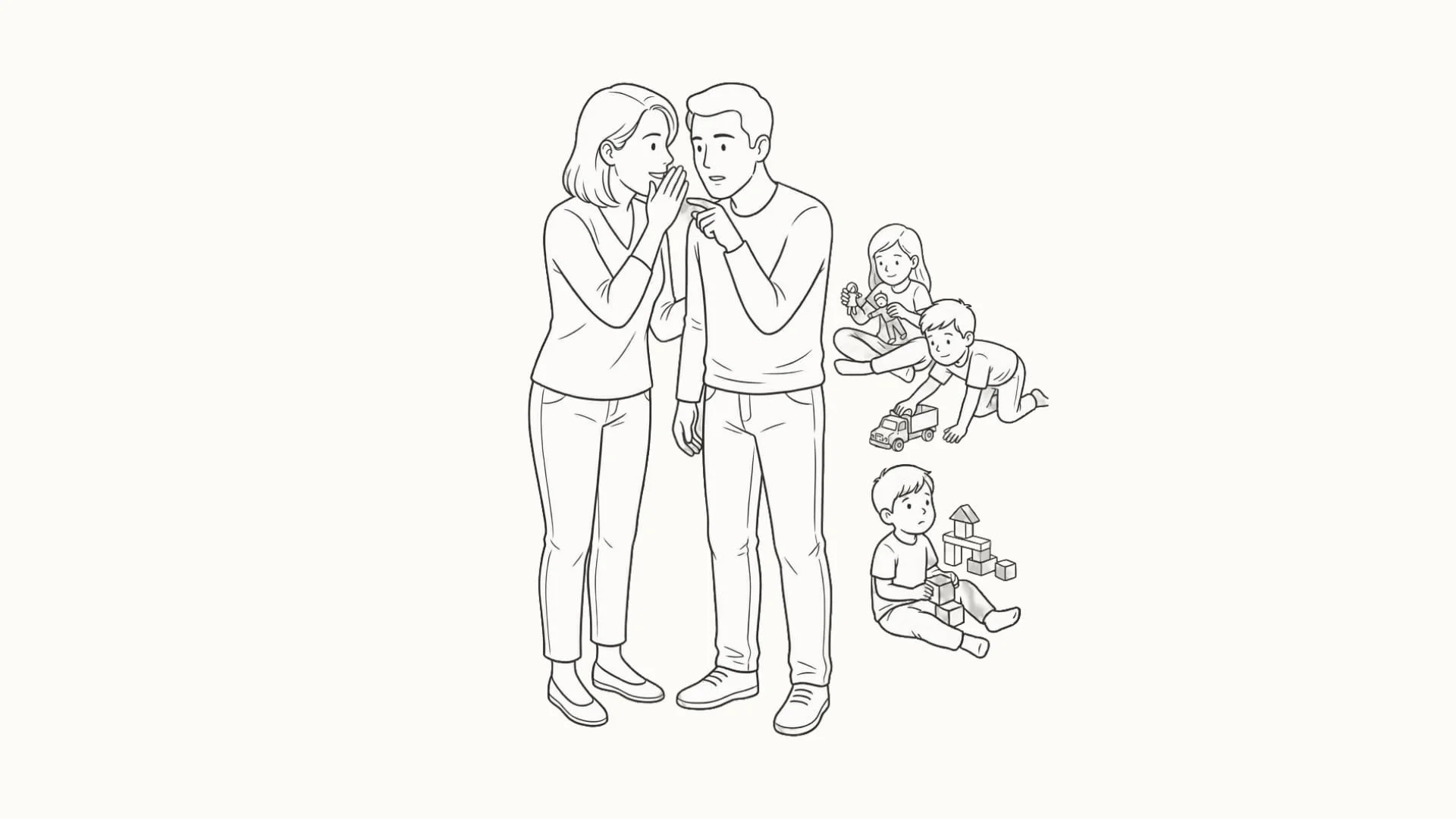
Gossip culture, social anxiety, and the model we are building without realising it.
We talk a lot in conscious parenting about the parent's voice becoming the child's inner critic, and how the way we speak to our children shapes the way they speak to themselves. But there is another layer that I think deserves equal attention: it is not just what we say to our children that shapes them. It is what they hear us say about everyone else.
The Model We Are Building

Every time a child hears a parent speak about someone who is not in the room, they are absorbing more than just our opinion about that person- they are forming a model of how the world works. They are learning how people are discussed, what happens to someone's reputation when they disappoint us, irritate us, or fail to meet our expectations, and what it means to be talked about behind closed doors.
Children are exquisitely attuned to this. Because if the people they love and depend on most speak about others this way, they begin to form a conclusion that is completely logical for a developing mind: if this is how people are spoken about when they are not present, then this is how I am spoken about
when I make a mistake, when I am challenging, when I disappoint.
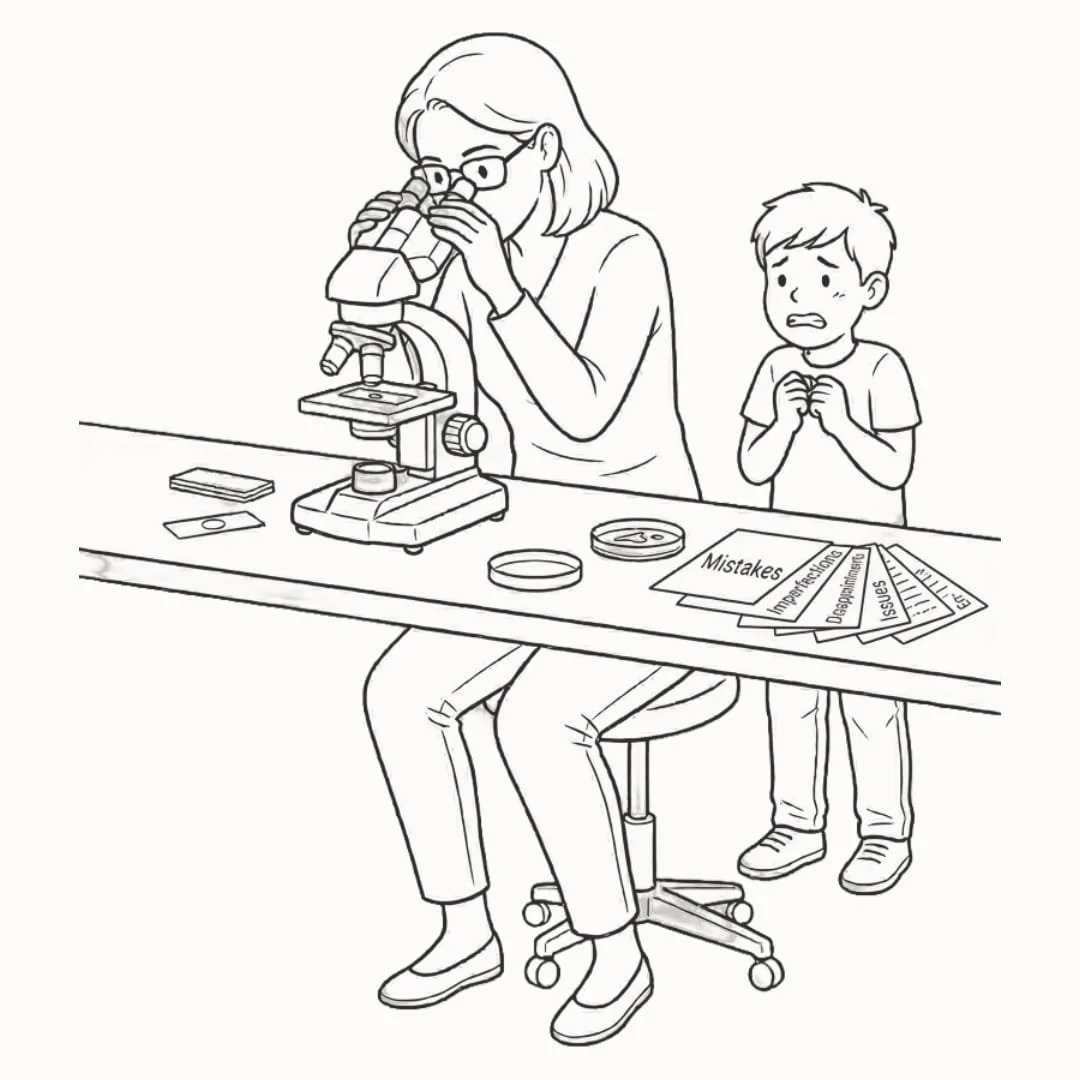
The way we speak about others becomes the filter through which our children imagine the world sees them. And that assumption influences a huge amount in their lives - how safe they feel socially, how much of themselves they are willing to show, how terrified they become of making mistakes.
The Seeds of Social Anxiety
Social anxiety is not usually rooted in a single incident. More often, it develops through accumulation and a gradual process of collecting evidence about how the world operates and how it responds to human imperfection.

A child who grows up surrounded by constant social commentary, where people are regularly evaluated, judged, and reduced to their worst moments, develops a certain understanding of the laws of the social world. Namely, that is a courtroom where everyone is constantly being assessed and measured according to others’ standards. And, perhaps worst of all, that the verdict on a person can change the moment they leave the room.
That child does not need to have been directly criticised to develop a fear of how they are perceived. The ambient environment of judgment is enough. They internalise this courtroom and carry it with them into every social situation, friendship, and moment of vulnerability. Underneath the majority of their interactions is the ever-present question: what are they saying about me when I am not there?
An important distinction
This is not an argument for suppressing every difficult feeling about another person, or for pretending that relationships are always straightforward and uncomplicated. Parents are human, and relationships are sometimes painful, frustrating, and genuinely hard to navigate. But how we process these experiences establishes how our children will navigate them in the future, and the sense of self they’ll use to do it.
The important distinction here lies in the difference between gossip and processing.

Gossip is speech about another person that reduces, judges, or entertains at their expense. It offers a verdict without the full story, and its purpose is rarely understanding. Honest processing, by contrast, is the attempt to make sense of a difficult experience with a trusted person, in a context of genuine reflection, with the goal of gaining clarity rather than delivering judgment.
So, the distinction lies not just in what is said but in the spirit in which it is said. One closes a person down into a fixed and unflattering image. The other views them with complexity, acknowledges that there is always more to the story than just our side, and leaves room for understanding even when the behaviour was genuinely difficult.
Children are more perceptive than we give them credit for. Even young children can feel the difference between a parent who is working through something honestly and one who is simply enjoying the reduction of another person. The tone, the energy, the absence or presence of compassion…all of it registers, even if the words are not fully understood.
Using this in real life

Referring to people with complexity and curiosity in front of our children does not require us to be endlessly charitable or to robotically pretend that difficult behaviour does not affect us. Rather, it asks us to cultivate the habit of accepting that people are more than their worst moments, viewing their behaviour with curiosity and modelling that habit consistently.
Curiosity and judgment cannot coexist - not just philosophically, but neurologically. Judgment is largely a function of the amygdala, the brain's threat detection system, which operates quickly, in black and white, and closes down nuance in favour of a fast verdict. Curiosity, by contrast, engages the prefrontal cortex - the slower, more rational part of the brain that’s capable of complexity, context, and what neuroscientists call prediction error tolerance. This is the ability to tolerate not fully understanding something without it feeling threatening. The two states use fundamentally different neural pathways. So, when we are genuinely curious about someone, the brain is simply not in the same state as it is when we are judging someone.
In other words, we cannot do both at once.
So, in practice, this might look like following an acknowledgment of frustration with a moment of genuine curiosity: “She was really upset today. I wonder what’s happening for her right now.”
It’s resisting the deeply ingrained pull to build a case against someone and sitting instead with the discomfort of not fully understanding their behaviour, and even being hurt by it. Some of the time, we may choose not to speak about certain things at all. Not because of denial or repression, but a genuine recognition that the conversation serves no one.

For our children, these small, consistent choices build the understanding that people are complex, our behaviour has context, and that the world is not in the business of delivering final verdicts on human worth. This understanding is a vital pillar of genuine social confidence, rooted in the belief that the world is fundamentally safe to be (inevitably) imperfect in.
Gossip Culture Can Stop With Us

Gossip culture is pervasive and completely normalised, to the point of being expected. It is woven into social bonding, workplace and family dynamics, and the fabric of everyday conversation in ways that make opting out feel strange or even antisocial. But it is a pattern, like so many others, that actually does not have to be passed down.
It can be examined, challenged, and stopped.

When a child grows up in a home where people are spoken about with humanity rather than judgment, where the default response to difficult behaviour is curiosity, not condemnation, a compassionate social mindset is allowed to develop. One where our child believes that not only are others safe from reduction, they are too. And that when they leave the room, what remains is not a demeaning, fault-finding expedition, but a family that sees them with complexity and care.
That is the environment in which a child can make mistakes, be difficult, complicated, disappointing, and still feel fundamentally safe in the world.
This begins with something as simple and as significant as the way we choose to speak about the people in our lives when they are not there to hear it.
Adrienne Crenshaw is a certified Parent Support Specialist and founder of Work in Progress Parenting. She works with parents to understand the patterns beneath the reactions, and to build the self-awareness that makes real, lasting change possible. Book a free chat here.